A WHO Collaborating Centre for Vectorborne and Neglected Tropical Diseases Project
The PacELF Endgame Project and Digital Library
Our goal is to assist in achieving the elimination of lymphatic filariasis in the Pacific Region. At James Cook University (JCU), we collect, store, and facilitate access to published and unpublished documents about the Pacific Programme for the Elimination of Lymphatic Filariasis (PacELF) and the epidemiology of the disease in this region.
PacELF Digital Library
About the library
We collect, organise, and share published and unpublished material on lymphatic filariasis in the Pacific, with a focus on the PacELF programme from 1999 to 2020. Our digital library is supported by a physical archive at James Cook University’s Bebegu Yumba Campus in Townsville, Australia. The archive includes Dr Kazuyo Ichimori’s personal collection and is housed in the WHO Collaborating Centre for Vectorborne and Neglected Tropical Diseases (AUS-174).
Browse the Library to find catalogued documents and request copies. We can scan hard-copy material on request, although some documents containing personal information can only be consulted in person.
Our archive also contains material that has not yet been catalogued. Contact us if you would like to visit, need help finding resources, or are looking for material for a particular project. We welcome hearing how you have used the collection.
PacELF Digital Library
How the library started
Established in 2015, the library was initially funded by the United States Agency for International Development (USAID) through NTD SC, a program of The Task Force for Global Health, Inc. The funding supported a partnership between James Cook University (JCU), Nagasaki University, and the WHO Regional Office for the Western Pacific. Subsequent support from the Joan Lawler legacy in 2020, combined with substantial volunteer effort, allowed the project to continue until 2026. The library is now supported by the JCU WHO Collaborating Centre for Vector-borne and Neglected Tropical Diseases.
We are very grateful to Dr Ichimori and James Cook University’s WHOCC, eResearch Centre, and Library for support, especially Kent Adams, Clair Meade, Alvaro Berg Soto, Peter Wood, Steve Vandervalk, Pauline Lawrey, Daniel Baird and many others. Thanks to our two interns, Sinead Rush and Jessica Scott and many other JCU volunteers for hours spent cataloguing and finding documents.
PacELF Digital Library
Milestones
March 2016
Started collecting and cataloguing documents from former programme directors and researchers, James Cook University, and WHO offices in Fiji, Philippines, and Switzerland.
August 2017
First catalogue developed. Launched PacELF digital library website for public access as Phase 1 with 271 publications.
2017-2026
Catalogued the Ichimori archive (hard-copies). Made additions, corrections and cross-referenced duplicates through launches of Phases 2 to 8. Supplied documents and scans on user requests.
November 2026
Revised the website and launched Phase 9 with 1751 documents.
The PacELF Project
Pacific Programme for the Elimination of Lymphatic Filariasis
PacELF worked within the framework of the Global Programme to Eliminate Filariasis, the WHO Regional Office for the Western Pacific and the Division of Pacific Technical Support.
PacELF, the first regional filariasis elimination programme, formed in 1999 as a network to coordinate the efforts in the twenty-two island countries and territories that are working to eliminate filariasis in the Pacific. The elimination strategy has two pillars:
- Annual mass drug administration (MDA) using diethylcarbamazine citrate (DEC), albendazole and/or ivermectin to stop transmission, and
- Clinical management of infections and support to minimize progression of morbidity and disability in those individuals that are already infected.
PacELF Project
Progress toward elimination
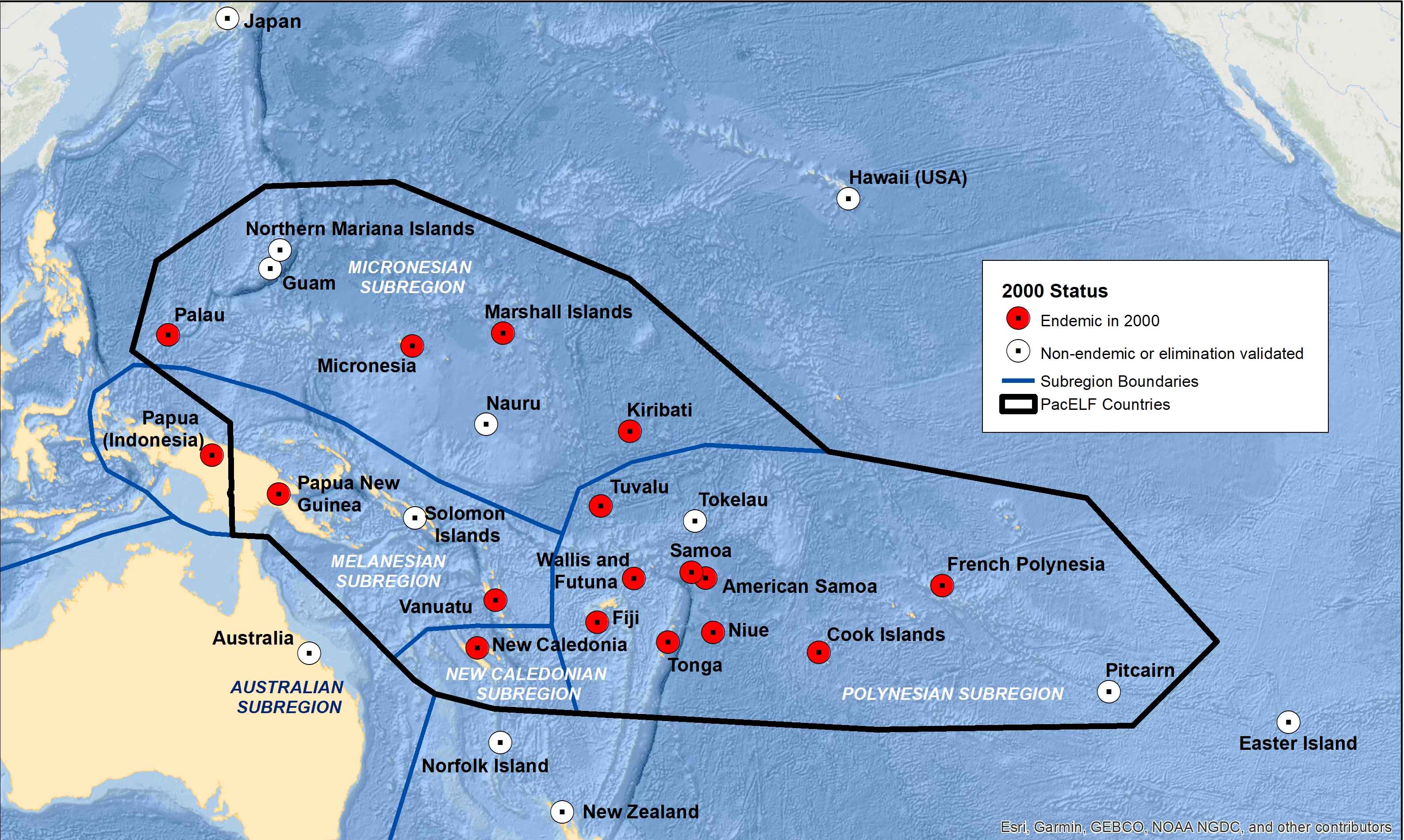
In 2000, six PacELF member countries and territories were classified as non-endemic for lymphatic filariasis: Guam, Nauru, the Northern Mariana Islands, Pitcairn Island, Solomon Islands, and Tokelau.
The remaining 16 endemic countries and territories entered the PacELF elimination programme. Since then, significant progress has been made, with some countries achieving elimination and others moving steadily towards that goal.
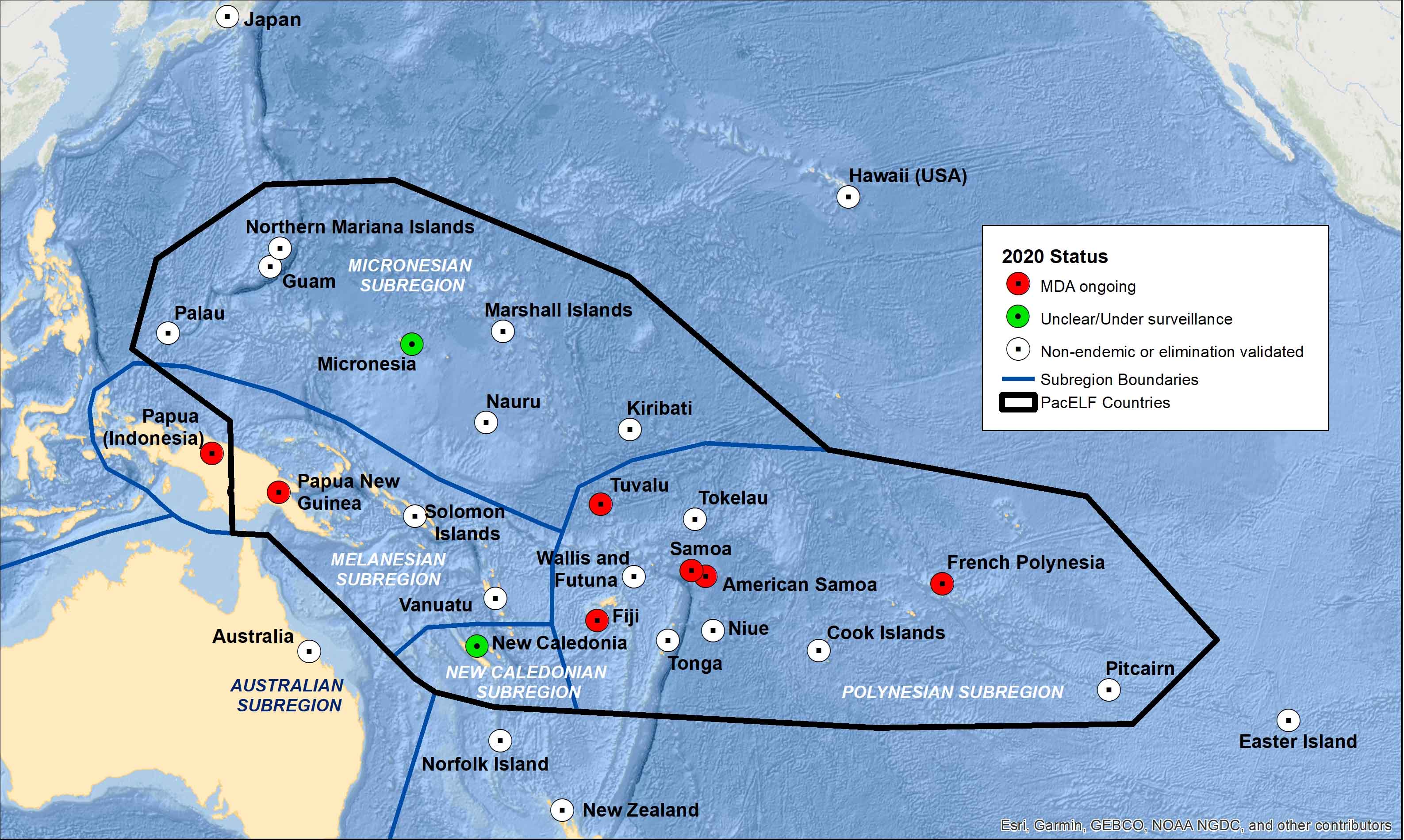
As of 2026, eight PacELF countries and territories have been validated by the World Health Organization as having eliminated lymphatic filariasis as a public health problem: Cook Islands, Kiribati, Niue, Palau, Republic of the Marshall Islands, Tonga, Vanuatu, Wallis and Futuna.
The remaining endemic countries and territories continue to conduct surveillance activities and, where required, mass drug administration: American Samoa, Federated States of Micronesia, Fiji, French Polynesia, New Caledonia, Papua New Guinea, Samoa, Tuvalu.
Several Pacific countries have also adopted triple-drug therapy, adding ivermectin to standard mass drug administration regimens to accelerate progress towards elimination.
Toggle between the 2 maps to see the change in country status from 2000 to 2020
Outputs
PacELF Publications
Progress by country with links to a bibliography of published literature from 1970 to mid 2017 is summarized in the following articles in a special issue of Tropical Medicine and Health in 2017 edited by Masahiro Hashizume and Peter Wood:
PacELF Books
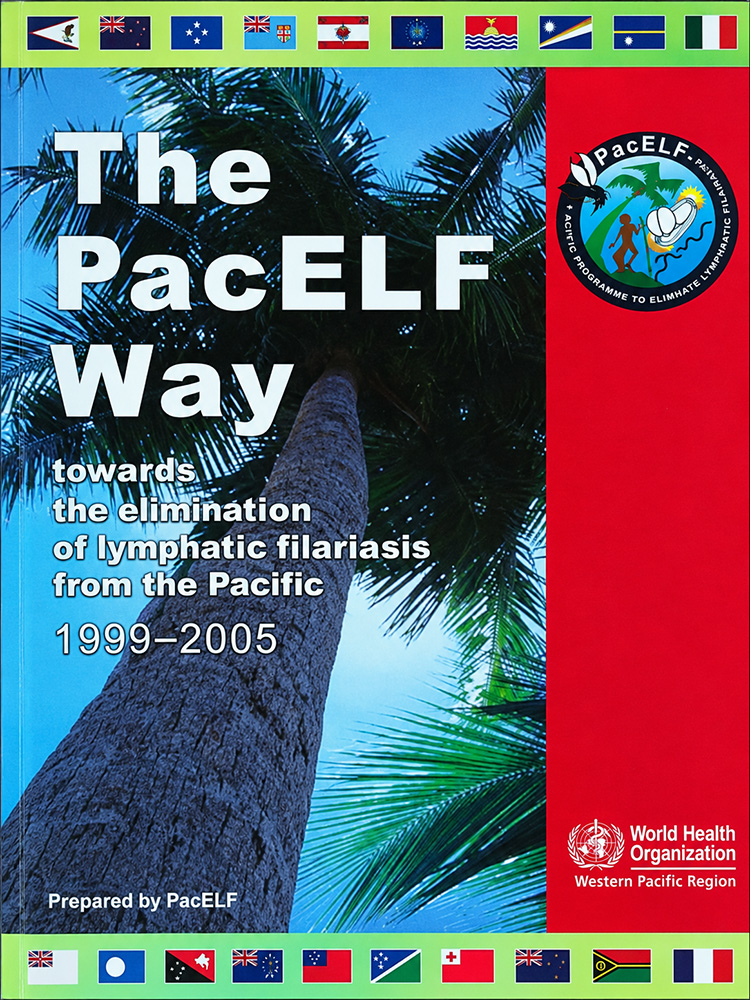
The PacELF Way
The PacELF Way (WHO, 2006) documents the progress of lymphatic filariasis elimination efforts across the Pacific and references many of the publications now archived in the PacELF Digital Library.
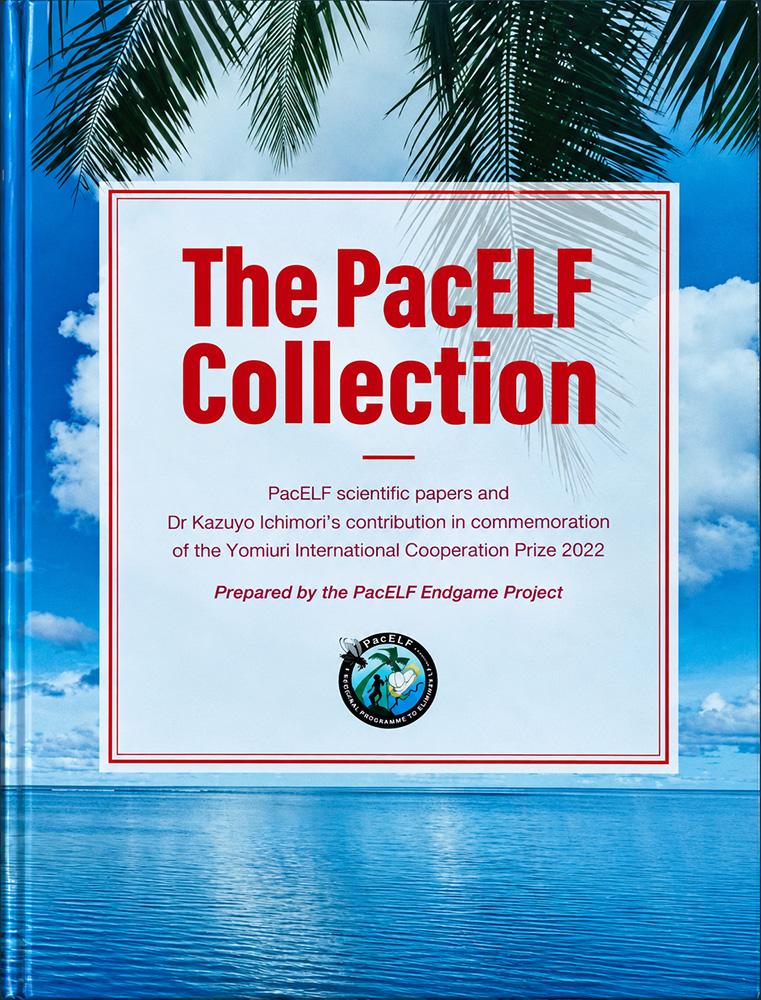
The PacELF Collection
The PacELF Collection (2023), The PacELF Collection: PacELF Scientific Papers and Dr Kazuyo Ichimori’s Contribution in Commemoration of the Yomiuri International Cooperation Prize 2022, includes an updated bibliography of Pacific lymphatic filariasis literature published between 1999 and 2020. Printed copies are available on request.
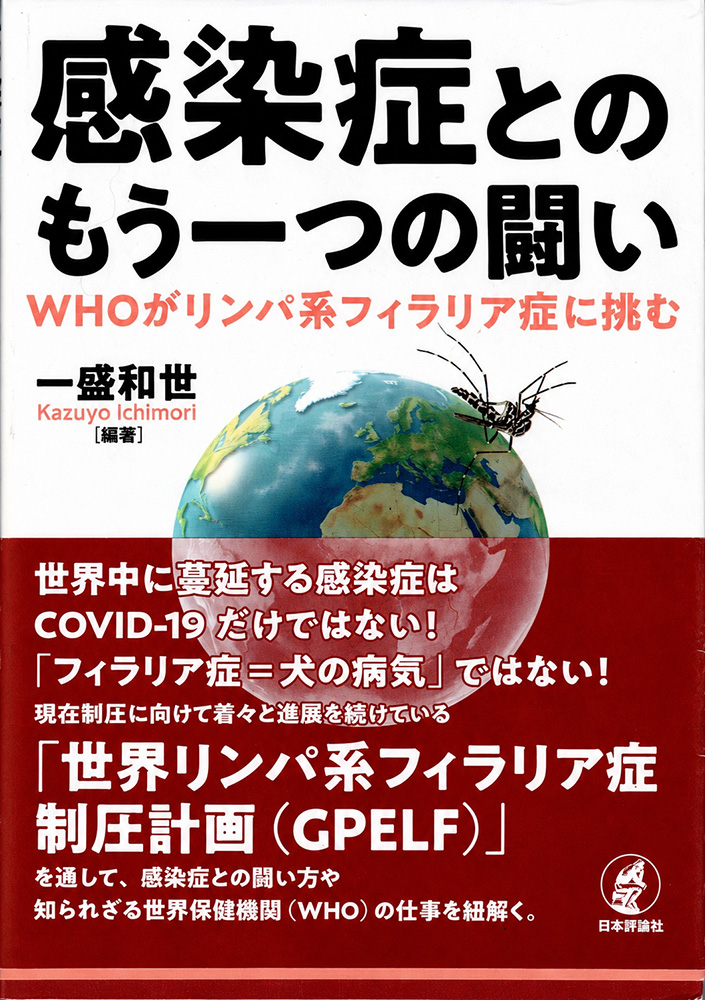
Dr Kazuyo Ichimori's Book (2026)
In 2026, Dr Kazuyo Ichimori published a new book in Japanese that drew on resources held in the PacELF Digital Library. The library team also contributed to the English translation, titled Another Battle Against Infectious Diseases: The WHO’s Challenge to Lymphatic Filariasis. The Japanese edition is available in hard copy through the PacELF Library, and the English translation is available as a digital document.
Testimonials
How researchers use the library
An archive for LF histories
I have used the library and find it most definitely useful. Specifically, I have relied on the library as an archive when mapping LF histories in the countries where I work. The library’s collection of grey literature (reports from WHO and other meetings) that are not accessible online has both supported and streamlined my research.
Dr Adam Craig
University of Queensland
2 March 2026
Documents that are difficult to find elsewhere
I have found the PacELF library immensely helpful.
It is a resource of documents relevant to this region that are difficult to find elsewhere.
In countries where I have worked previously hard copies are no longer possible to find. In addition the journals where relevant articles are published are often not prioritised for access through my normal university and hospital library affiliations.
Dr Myra Hardy
Murdoch Children’s Research Institute
11 March 2026
Supporting a research proposal
Thank you so much for your fast response. This will help immensely with my proposal.
Thank you also for the additional document. This document happens to be exactly what my proposal is looking into: surveillance of the migrant population in Palau.
Research Assistant
University of Queensland
9 June 2026
Coverage
In the media
WHO Collaborating Centre Recertification (2026)
In March 2026, James Cook University was recertified as a World Health Organization Collaborating Centre for Vector-borne and Neglected Tropical Diseases for a further four-year term.
A Guide to Mosquitoes in the Pacific (2025)
The PacELF Digital Library provided references and full-text publications for A Guide to Mosquitoes in the Pacific, authored by James Cook University researchers Tanya Russell and Tom Burkot. The guide serves as a key reference for researchers, public health practitioners, and vector control programmes working to reduce mosquito-borne diseases, including lymphatic filariasis, across the Pacific region.
AITHM News Feature (2022)
On 28 September 2022, the Australian Institute of Tropical Health and Medicine (AITHM) published an article, The Road to Freedom from Lymphatic Filariasis, highlighting the history and impact of the PacELF Digital Library.
Supporters

